
Tennis Court Dimensions and Surfaces in Los Angeles
If you live in Los Angeles, tennis is not just a weekend hobby – it’s part of the city’s outdoor lifestyle. From public courts in neighborhood parks to private clubs and school facilities, understanding tennis court dimensions and surfaces is essential whether you’re a player, coach, property manager, or planning a new court installation.
Standard Tennis Court Dimensions for Los Angeles
Tennis court dimensions are governed by international standards. Los Angeles courts follow the same regulations used across the U.S.
Official Tennis Court Measurements
- Court length: 78 feet
- Singles court width: 27 feet
- Doubles court width: 36 feet
- Net height:
- 3 feet at the center
- 3 feet 6 inches at the posts
These measurements apply whether the court is built in a public park, school campus, or private residence.
Total Space Needed Around the Court
In real-world Los Angeles construction, the total footprint matters just as much as the playing area.
- Recommended total area: about 120 feet × 60 feet
- This allows safe run-off space, fencing, lighting, and ADA access, where required
Knowing these dimensions is especially important in LA, where land is tight and repurposing existing spaces is common.
Common Tennis Court Surfaces in Los Angeles
The tennis court surface directly affects ball speed, player comfort, and long-term maintenance costs. In Southern California’s climate, some surfaces perform far better than others.
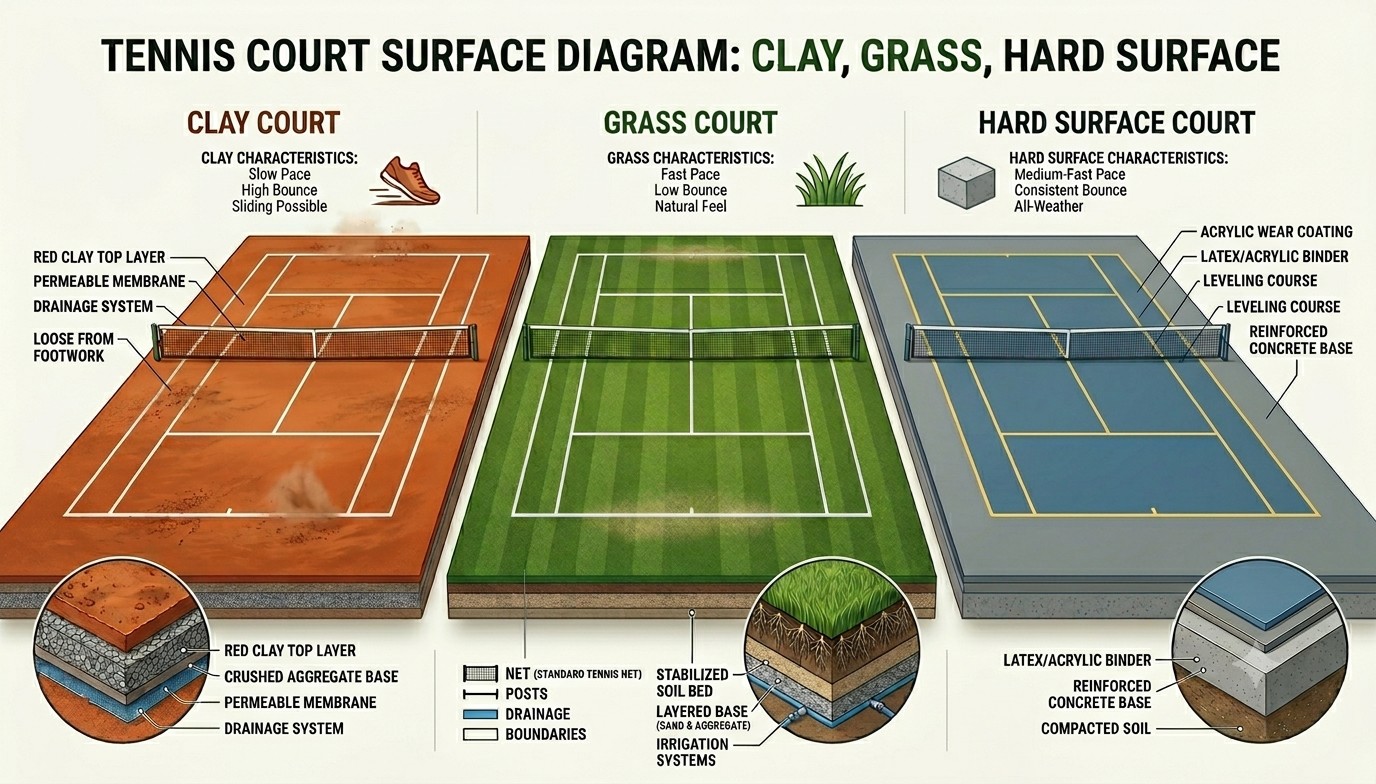
Hard Court Tennis Surfaces (Most Popular in LA)
Hard courts dominate Los Angeles tennis facilities, and for good reason.
What they’re made of:
- Asphalt or concrete base
- Acrylic color coating system
Why LA prefers hard courts:
- Excellent performance in dry, sunny weather
- Lower maintenance than grass or clay
- Predictable ball bounce for all skill levels
Hard courts are ideal for:
- Public parks
- Schools and universities
- High-traffic community facilities
Cushioned acrylic systems are increasingly popular in LA because they reduce joint stress for year-round players.
Clay Tennis Courts: Slower Play, Higher Maintenance
Clay courts are less common in Los Angeles, but still found in private clubs and specialty facilities.
Key characteristics:
- Slower ball speed
- Higher bounce
- Encourages longer rallies
Considerations for LA:
- Requires regular watering to prevent drying
- More labor-intensive maintenance
- Can struggle in drought-restricted areas
Clay works best for private clubs with dedicated maintenance teams, rather than public facilities.
Grass Tennis Courts: Rare but Iconic
Grass courts are the least common surface in Los Angeles.
Pros:
- Fast play
- Softer underfoot
- Prestigious appearance
Cons in LA:
- Extremely high water usage
- Constant mowing and leveling
- Poor durability for frequent use
Because of water regulations and maintenance costs, grass courts are rarely built in Southern California.
Choosing the Right Tennis Court Surface in Los Angeles
When selecting a surface locally, consider:
- Usage level: Public courts need durability
- Maintenance budget: Acrylic hard courts cost less long-term
- Player demographics: Cushioned surfaces benefit older players
- Sun exposure: UV-resistant coatings are essential
For most LA projects, acrylic hard courts with optional cushioning provide the best balance of performance and cost.
Tennis Court Maintenance in Southern California
Los Angeles weather is friendly, but not maintenance-free.
Essential upkeep includes:
- Routine cleaning to remove dust and debris
- Crack repair from ground movement
- Resurfacing every five to eight years, depending on use
Proactive maintenance prevents costly full rebuilds and keeps courts safe and playable year-round.
Building or Playing on Tennis Courts in LA
Understanding tennis court dimensions and surfaces helps Los Angeles players and property owners make smarter decisions. Whether you’re lining up a new build or simply want to know why your local court plays the way it does, the right dimensions and surface choice make all the difference.
In a city that plays tennis almost every day of the year, investing in the right court design for LA conditions isn’t optional—it’s essential.